
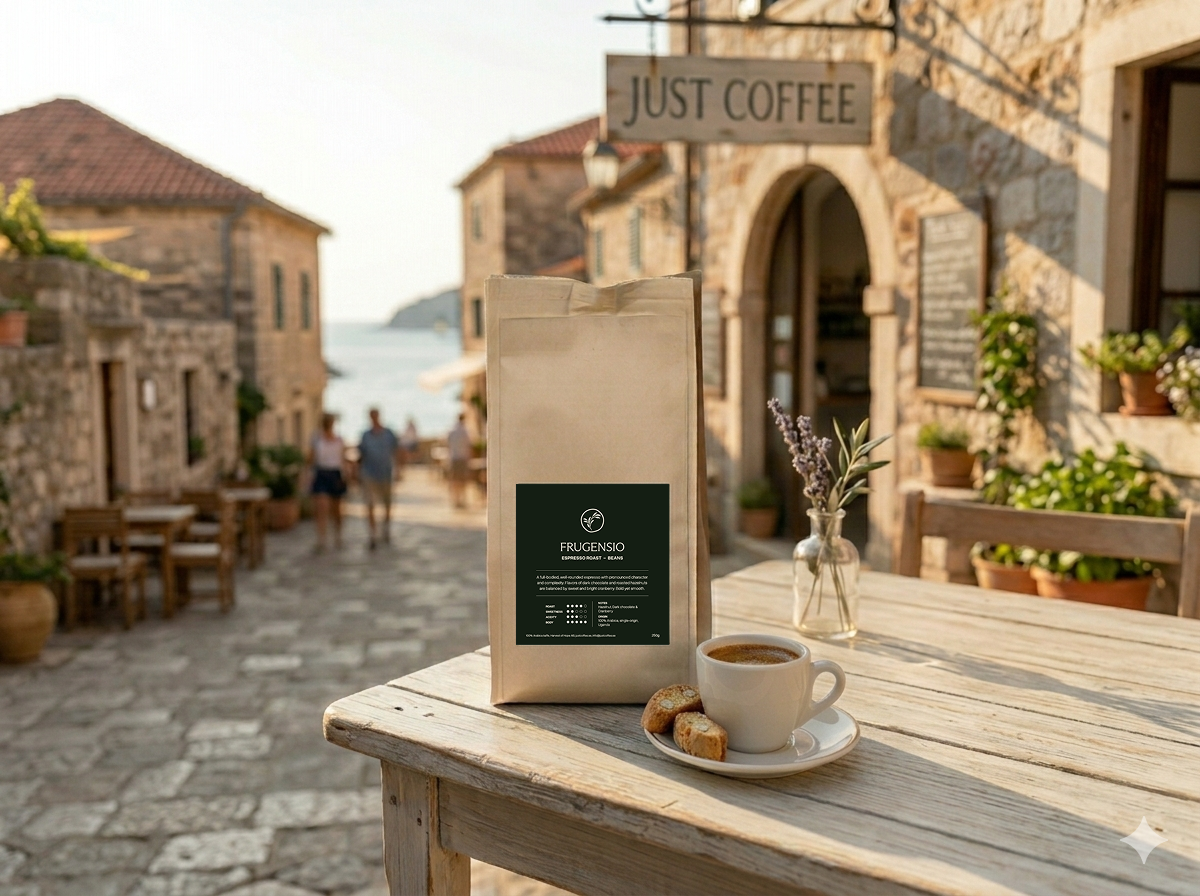
The coffee guide
From brewing back to growing, a lot of coffee information in one very drinkable page.
Which roast is yours, which dose fills your brewer, and how to brew it so it tastes like it was intended when it left Uganda.
Step one· 1 of 6
Find your coffee in a few questions
No wrong answers, and no coffee snobbery. Just tell us how you drink it.
Question 1 of 4
How does coffee usually happen in your kitchen?
The line-up· 2 of 6
Three coffees, three kinds of drinker
Every roast is named after a graduate of our farm school in Uganda — parents growing their way to an income. Here's what each one tastes like, and who tends to fall for it.
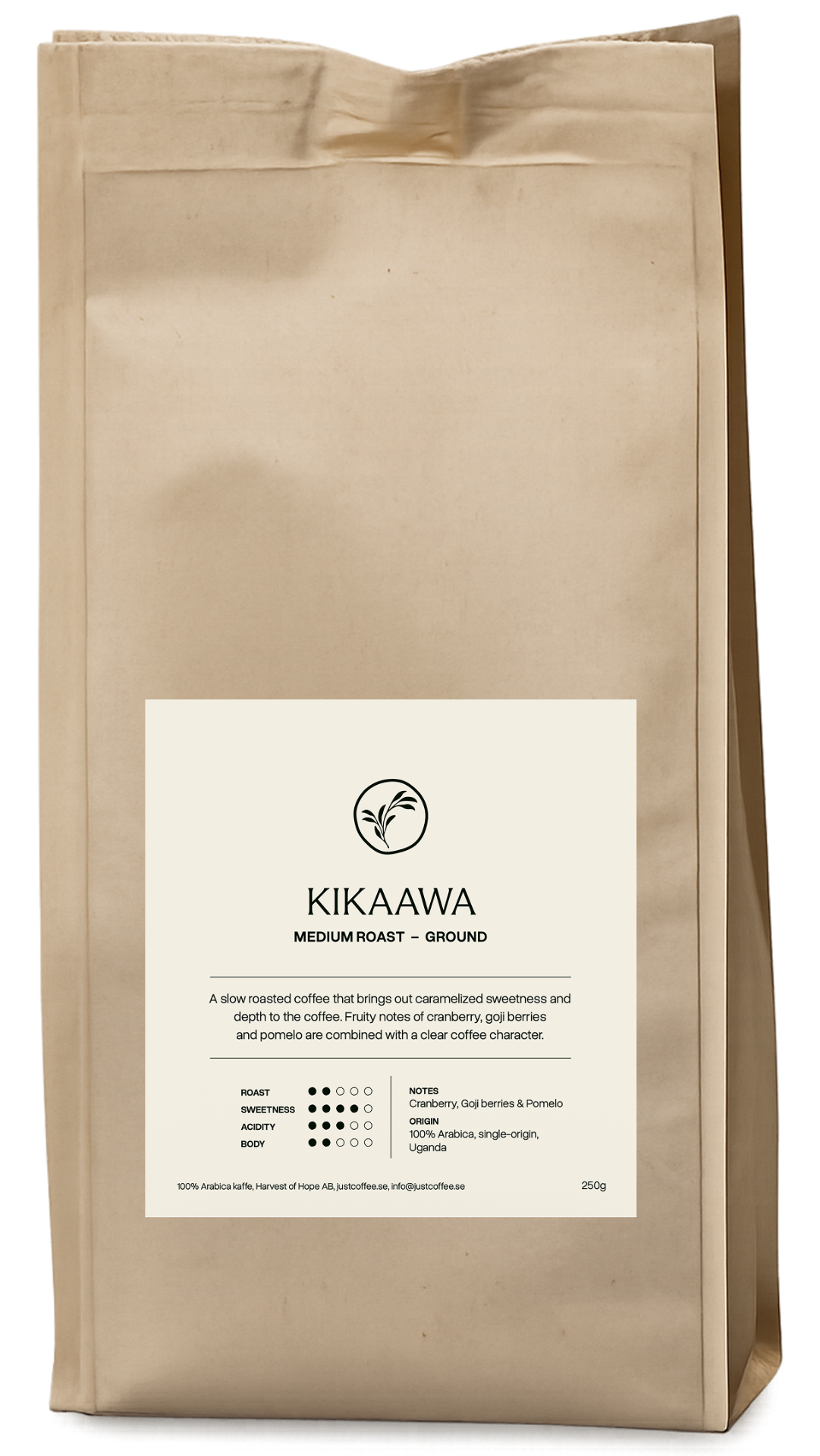 medium
KIKAAWA
The morning explorer
Light on its feet and full of berries. For the person who leans over the cup and says “wait — is that cranberry?”
- Origin
- Ibanda, Uganda
- Process
- Natural
- Variety
- SL28
- Altitude
- 1400 masl
Brews best as Pour-over, Batch brewer, AeroPress
Buy KIKAAWA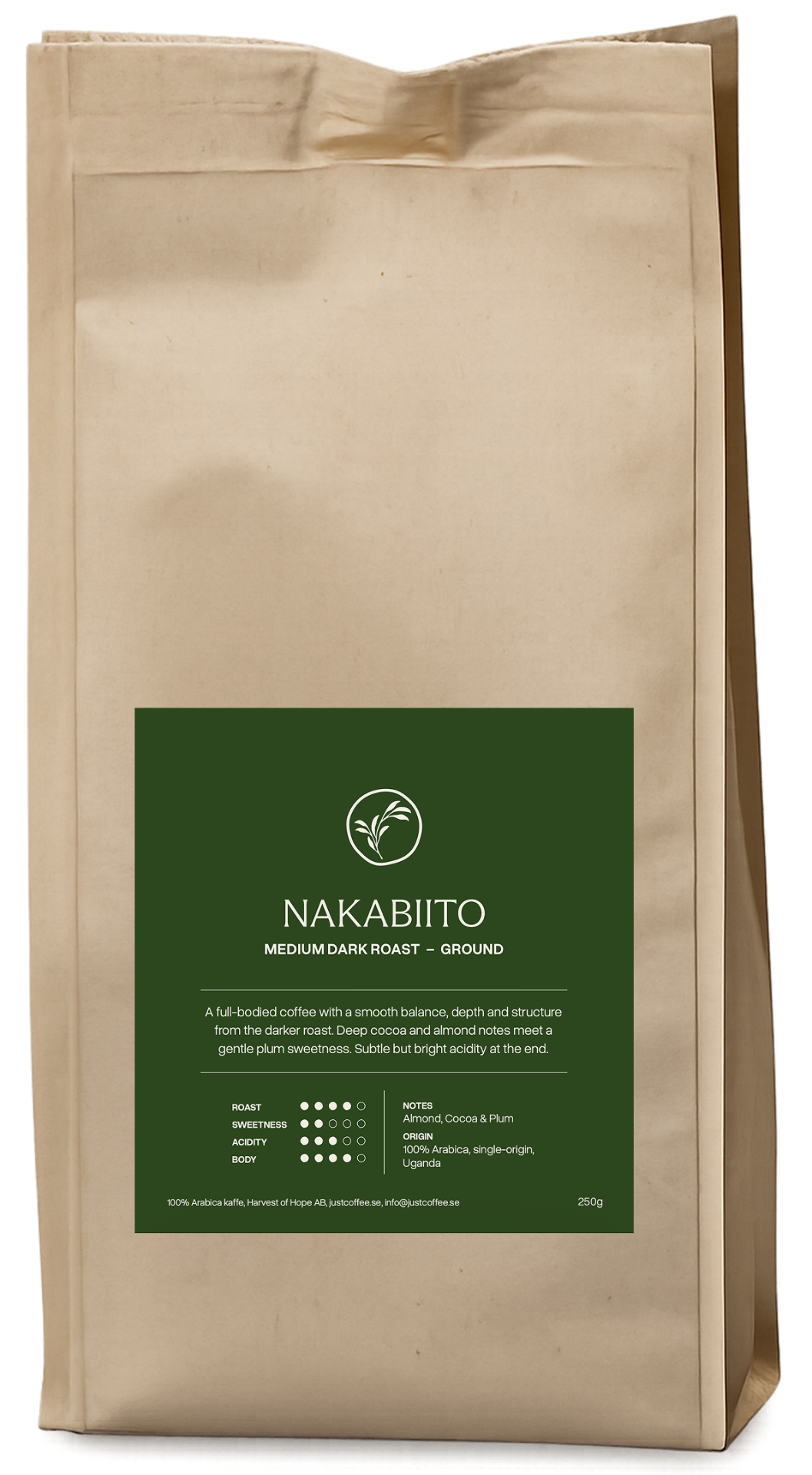 medium dark
NAKABIITO
The everyday classic
Almond, cacao and plum. The one you can brew half-asleep and still get right — and the one that shines with milk.
- Origin
- Ibanda, Uganda
- Process
- Natural
- Variety
- SL28
- Altitude
- 1400 masl
Brews best as Batch brewer, Pour-over, Espresso
Buy NAKABIITO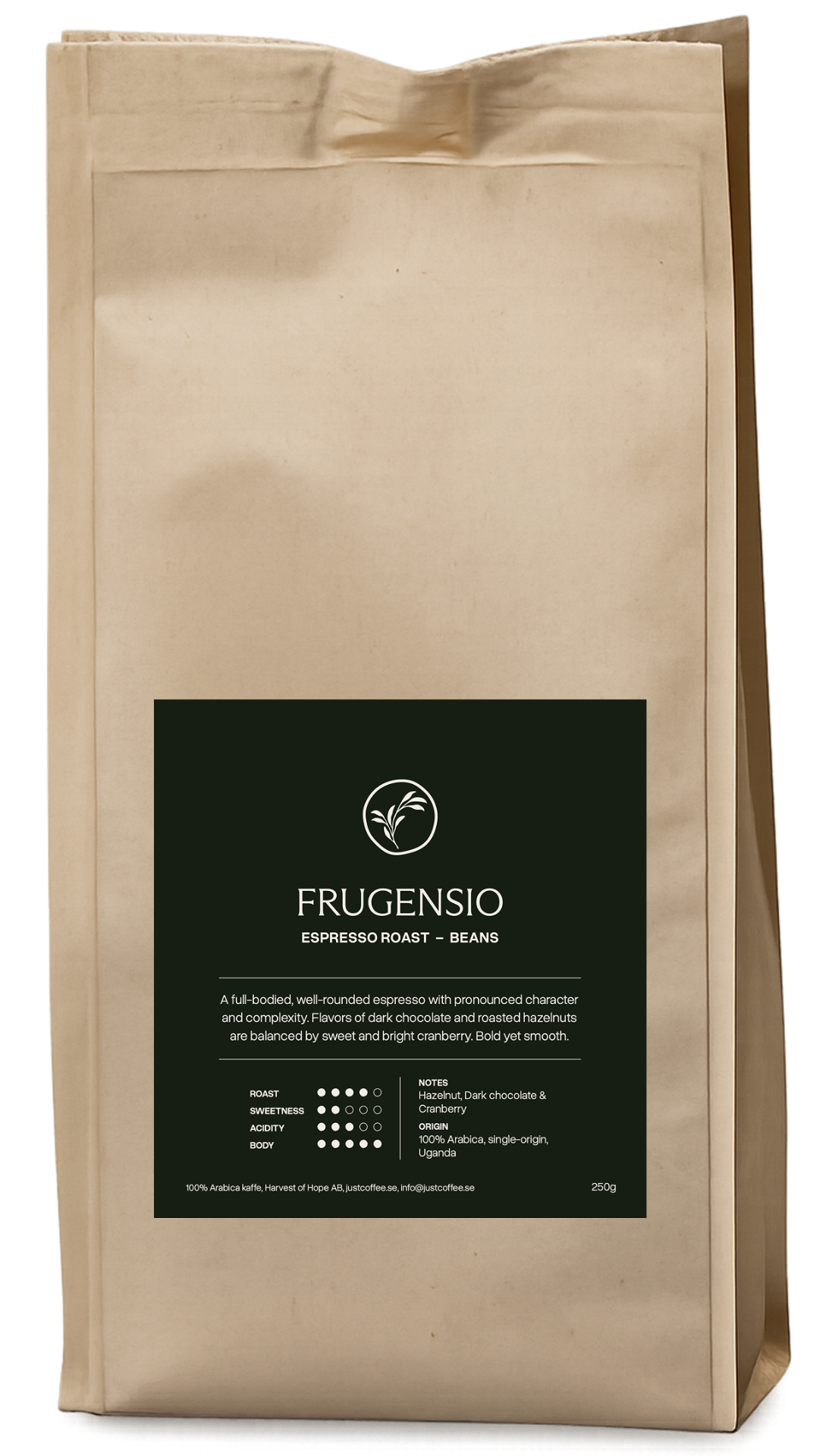 dark
darkFrugensio
The intense one
Dark, deep and syrupy. Built for a short, thick shot and for people who like their coffee to arrive with an opinion.
- Origin
- Ibanda, Uganda
- Process
- Natural
- Variety
- SL28
- Altitude
- 1400 masl
Brews best as Espresso machine, Moka pot, French press
Buy FrugensioSwipe to meet the other two →
mediumKIKAAWA
The morning explorer
Light on its feet and full of berries. For the person who leans over the cup and says “wait — is that cranberry?”
- Origin
- Ibanda, Uganda
- Process
- Natural
- Variety
- SL28
- Altitude
- 1400 masl
Brews best as Pour-over, Batch brewer, AeroPress
Buy KIKAAWAmedium darkNAKABIITO
The everyday classic
Almond, cacao and plum. The one you can brew half-asleep and still get right — and the one that shines with milk.
- Origin
- Ibanda, Uganda
- Process
- Natural
- Variety
- SL28
- Altitude
- 1400 masl
Brews best as Batch brewer, Pour-over, Espresso
Buy NAKABIITOdarkFrugensio
The intense one
Dark, deep and syrupy. Built for a short, thick shot and for people who like their coffee to arrive with an opinion.
- Origin
- Ibanda, Uganda
- Process
- Natural
- Variety
- SL28
- Altitude
- 1400 masl
Brews best as Espresso machine, Moka pot, French press
Buy FrugensioStep by step· 3 of 6
How we'd brew it
Four methods, four recipes we actually use. Tap a step to open it, and hit start for a guided timer.
Pick a method
Pour-over
Medium · ~3:30
The clearest, most aromatic cup you can make at home. Worth the four minutes.
- Coffee
- 18 g
- Water
- 300 g at 94 °C
- Grind
- Medium — like table salt
- Ratio
- 1:16
Great with KIKAAWA & NAKABIITO
Now: Rinse the filter
Sour and thin? Grind finer. Bitter and drying? Grind coarser. Change one thing at a time.
The one variable that changes everything· 4 of 6
Grind size, made visible
If a cup tastes wrong, grind size is almost always the culprit. Slide through the scale and match the texture.
Grind size
Medium
Feels like table salt
Made for
Pour-over & batch brewer
Contact time 3–6 min
Before the roaster· 5 of 6
Varieties, cherries and the art of drying
Where the flavour actually comes from: the cultivar in the soil, and what happens to the fruit in the days after picking.
From flower to green coffee
Roughly a year of work happens before a bean ever meets a roaster.
Some varieties worth knowing
Coffee has cultivars the way wine has grapes. These are the East African names you'll see on our bags, plus a few legends from elsewhere.
Variety
SL28
- Kenya · 1930s Scott Labs
- 1 600–2 000 m
The one everyone whispers about. Bred in Kenya for drought tolerance, it turned out to carry one of the most electric acidities in coffee — blackcurrant, grapefruit, cane sugar.
Old, stubborn trees. Small harvests, enormous cups.
How the fruit becomes flavour
Processing is the single biggest flavour decision made on the farm — some say bigger than the roast. Every method has its own argument though.
Natural
Torrberedd
The oldest way, and still the most generous.
The cherry is picked ripe and laid whole on raised beds, then turned by hand — sometimes hourly — for weeks while the African sun does the work. The fruit dries around the seed and hands it everything it has: sugar, perfume, depth. Nothing is washed away, nothing is rushed. It is the method that asks the most of the people on the farm and gives the most back in the cup.
What it gives you
- The sweetest, most fruit-forward cup of any method
- Uses almost no water — the kindest option where water is scarce
- Rewards careful picking: only ripe cherries survive it well
- Big body and long finish, beautiful in milk and unforgettable black
- Lowest equipment cost, so more of the value stays with the farmer
Trade-off · Unforgiving of shortcuts — it takes constant turning and a watchful eye.
Cup profile
Tastes like
Timeline
14–25 days on the bed
Coffee words· 6 of 6
The jargon, translated
Tap any word to unfold a plain-language explanation.
Ready to put it into practice?
Every bag closes a loop that starts on a red-earth farm in Uganda and ends at your kitchen table.